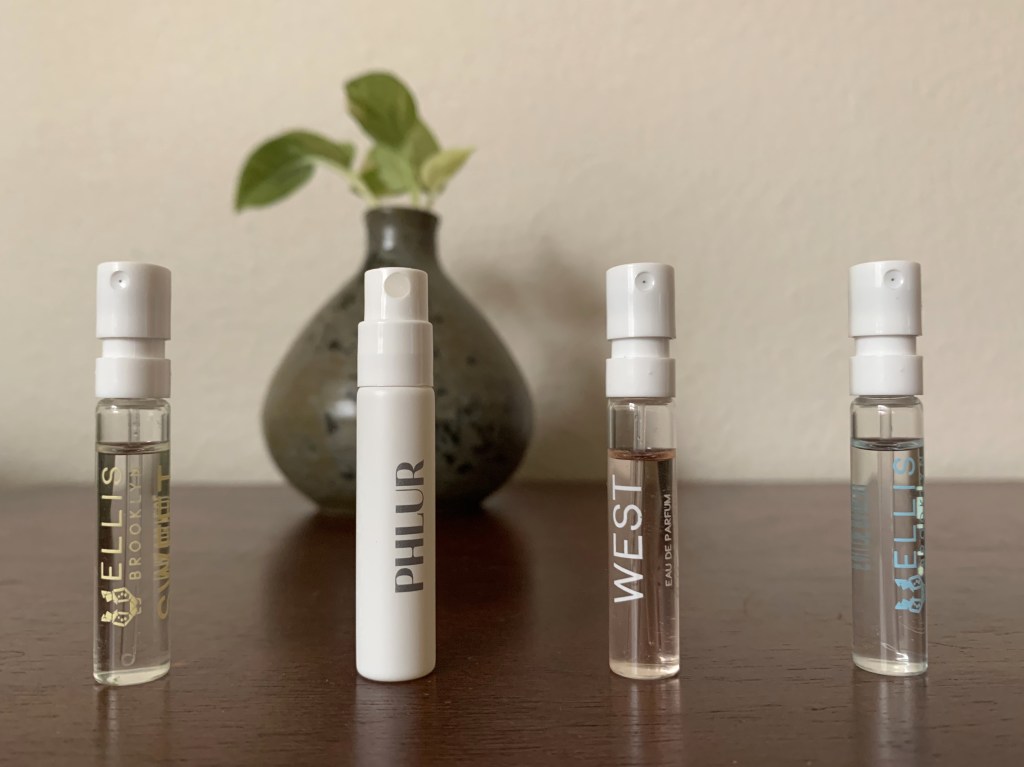
Beauty samples are magical, common little things. Concentrated bottles full of years of formula perfection and a thousand design choices – their founders’ labors of love. Samples are opportunities to experience en masse the wide range of brands in this large, saturated beauty market; to be immersed in flagship, cult products; and to discover smaller upstarts. When sampling really clicks, it turns the unfamiliar into a beloved essential. Every sample is a catalyst of curation, intention, and potential.
In an era that Marie Kondo took by storm, though, samples seem bygone. The clutter in their accumulation at times feels more indulgent for the brand than for the benefit of customers. And in the grand scheme of things, truthfully, 90% of samples haven’t been worth purchasing. My travel bag has turned into the graveyard where samples go to die. Every time the check-out page asks which 3 I’d like to include with my purchase, I dare to resign another set to their dark fate next to cleanser sachets I haven’t touched and perfume mini-bottles that are likely long expired. Even when I traveled (a past tense activity), I consumed cautiously. Now that I have no places to go, be, see, visit, or inhabit, I’m left to be the dragon recklessly hoarding beautiful trinkets.
Yet still, samples are expensive, gorgeous, and tempting all at once. Having been on the brand side of production and planning, I’ve seen packaging costs alone rise to $2 or $3 a unit while retailers and other sampling partners’ programs often ask for products for free or at steep discounts to the tune of a few cents each. The marketing benefit, they expect, will be worth the sunk cost of production.
And they’re right.
I’ve fallen in love with products through the samples I’ve received. In turn, the samples turned me into a loyal brand consumer. Similar to dating, though, not every single one is a match. The difficulty of being a sample, if I may imagine the life of an inanimate object, is fitting into a consumer’s pre-existing routine. You not only have to inspire positive feelings through packaging and performance, in cases where there is a precedent-product, you have to convert your consumer into a devotee who is willing to abandon comfort for novelty.
Despite the challenges, love is possible – under the right circumstances. The few times I’ve fallen for a product, I was already primed and curious. Months of social media chatter hyped Kosas’s Tinted Face Oil before my first sample and subsequent purchase. A clean beauty roundtable introduced me to Ellis Brooklyn and its founding story. When their perfumes showed up as sample options, I knew I had to give the brand a try. Familiarity is the key to turning the sample from a one-off freebie to a routine staple. And it goes both ways. I’ve revisited a brand I first met as a sample after my toner brand changed formulas simply because my sampling experience reassured me that the formula wouldn’t dry me out or be comedogenic.
Samples have always been a beckoning for adventure – into novelty and the untested. But recent times have been far from risk-filled. Instead, we’ve been holding onto nostalgia a little tighter this season, leaning into rewatches of Friends and The Office as socially acceptable emotional crutches. It begs the question, do samples still have their place – when the obliteration of travel has eliminated the need for travel-sized and when the world seems to have halted into standstill? Perhaps it’s now that we need a change of pace more than ever. Minute disruptions to jolt us out of this feeling of holding our breath. Maybe it’s time to dig back into that travel bag to breathe a manageable amount of excitement into my stagnant beauty routine and pandemic life.
 Tiffany Cao